RuSpace: 2011
March
2/3: Mars landing
Haven’t been posting for the usual reasons.
The Mars-500 crew reached Mars orbit in late January, landed on Mars on 12 February and reached the mission’s halfway point two days later. They performed 3 simulated EVAs (February 14, 18 and 22) and have now departed, to arrive at Earth in November. They still seem to be in mostly good psychological health!
The first ship of the new Soyuz variant, TMA-01M (700 series), launched to the ISS on 7 October with Expedition 25/26. Space Shuttle Discovery launched on 24/2 after a 4-month delay. The Japan Space Agency’s HTV-2 Konotori (H-II Transfer Vehicle, launched 22/1) and ESA’s ATV Johannes Kepler (launched 16/2) are also docked, so all the vehicles of the international partners are up there at the moment! There was a plan to undock the Soyuz TMA-01M to do a flyaround and take photos (this has not been done since STS-71 Atlantis docked with Mir), but Roskosmos decided against it, disappointingly, as the TMA-01M is still classified as a test vehicle.
Six new cosmonaut candidates, approved by an interdepartmental commission on 26 April and 12 October, begun an 18-month training course at GCTC, Star City, starting 15 November and ending July 2012. The candidates, all male, are:
- Andrei Nikolaevich Babkin (RSC Energiya)
Андрей Николаевич Бабкин - Aleksei Mikhailovich Khomenchuk (GCTC)
Алексей Михайлович Хоменчук - Sergei Vladimirovich Kud’-Sverchkov (RSC Energiya)
Сергей Владимирович Кудь-Сверчков - Denis Vladimirovich Matveev (GCTC)
Денис Владимирович Матвеев - Svyatoslav Andreievich Morosov (RSC Energiya)
Святослав Андреевич Моросов - Ivan Viktorovich Vagner (RSC Energiya)
Иван Викторович Вагнер
See my Cosmonaut Group page for links. Annoyingly, no official photos are taken until they are assigned a spaceflight, so portraits must be scrounged from the Internet.
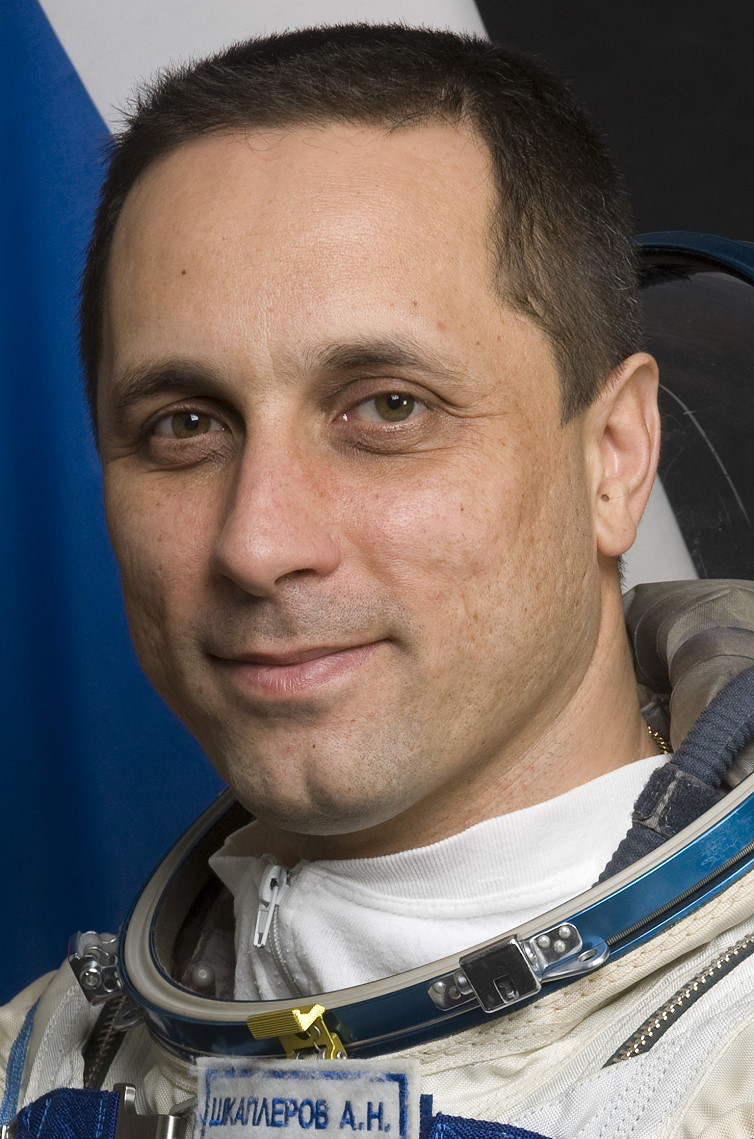
While updating that page, I noticed that a new photo of Anton Shkaplerov at the Spacefacts site shows him as rather nice-looking! :-)
The Cosmonaut Group is now united:
Roscosmos Head Signs the Order to Establish United Cosmonaut Corps
Roscosmos Head Anatoly Perminov signed the Order “About Establishment of Roscosmos’ United Cosmonaut Corps” of Dec. 7, 2010.
The order defines completion of Roscosmos Cosmonaut Corps establishment in GCTC by Jan. 1, 2011.
The Corps is to unite cosmonauts of three groups - GCTC, RSC-Energia and IBMP – in a single infrastructure in order to “enhance cosmonaut selection and training effectiveness and to maintain coordinated national policy in human space missions.”
Source: Roskosmos news, 11/12/2010 (Russian version; official Order)
17/3: Safe landing
Soyuz TMA-01M landed apparently safely yesterday (16) at 07:54, despite various glitches after its launch – see James Oberg articles “A Digital Soyuz,” September 2010 and “Digital Soyuz Return Could Be Rocky,” 11/3/2011. From the 16/3 ISS On-Orbit Status:
TMA-01M (#701), the first fully “digital” Soyuz, undocked from the MRM2 (Mini Research Module 2) Poisk port early this morning at 12:26 a.m. EDT, after the crew had performed leak checks of the vestibule area between the MRM2 and the Soyuz spacecraft, of their Sokol suits and of the hatch between the Descent Module (SA) and Orbital Module (BO). Three minutes after physical undocking, Soyuz performed the first manual separation burn. This was followed at ~12:33 a.m. by the planned test of the new RODK Manual Attitude Control in Digital Mode which provides automated LVLH (Local Vertical-Local Horizontal) attitude control. After a second manual sep burn (~12:39 a.m.), Kaleri performed the planned test of the ROAK Manual Attitude Control in Analog Mode, which involved the three new orbit-installed rate sensors (“micro ammeters”), designed to provide the crew with information on roll rate & roll angle (officials later pronounced both tests successful). At about 2:56 a.m., the crew activated the spacecraft’s VTsVK MCS (Motion Control System) “Chaika.” The actual de-orbit burn of 4 min 17 sec duration came at 3:03 a.m., resulting in a 115.2 m/sec deceleration. Tri-module separation occurred at 3:28 a.m. 16 sec after the separation command, software pitched the PAO (Instrumentation/Propulsion Module) in the rear to a specific angle (-78.5 deg from reference axis) which, if PAO would have remained connected to the SA/Descent Module, would have resulted in enough heating on the connecting truss to melt it, thus ensuring separation. Atmospheric entry followed at 3:31 a.m. and nominal parachute deployment at 3:40 a.m. Following initial observation by Russian SAR personnel in two helicopters, the Soyuz vehicle landed in snow at 3:54 a.m., tipping over in the wind.
“Star City at 50,” Air & Space Magazine, 1/3/2011. Article by Michael Cassutt giving an overview of where the Cosmonaut Training Center is now, and the challenges it faces (mainly chronic underfunding). It is rather disappointing the Russian Air Force does not seem interested in manned spaceflight; this surely would have some strategic value:
Though Roskosmos owns Star City, the agency doesn’t necessarily like the arrangement. According to former cosmonaut Yuri Baturin, “Roskosmos did not plan to absorb GCTC. But the Ministry of Defense specified reductions in armed forces, and simply included GCTC in that.” Apollo-Soyuz astronaut Tom Stafford put it more directly: “The Russian air force couldn’t afford to keep paying the bills. They don’t have an interest in manned spaceflight – they never really did.”
The cosmonaut-pilots also seem to have lost their training aircraft:
Under military control, the training center’s flight support unit, the Seregin Wing, had 16 aircraft, from Aero L-39 training jets to Tupolev Tu-154 transports. These were used by the cosmonauts to maintain pilot proficiency, and for weightlessness training. But in late 2009, the Russian air force disbanded the wing and dispersed the airplanes. “Except for one,” Krikalev notes, “a Tu-154 with glass hatches in its fuselage,” which was formerly used by the Ministry of Defense in NATO’s “Open Skies” program.
12 April marks 50 years since Yurii Gagarin’s first and only spaceflight, and the first manned spaceflight. The problem with these anniversaries is that, with the Russian space program at least, a lot of energy seems to be spent looking nostalgically backward, rather than planning missions for the future. Countries such as China (well, it’s the only other country outside of Russia and the USA to have independently flown humans into space) seem to be forging ahead in their slow but methodical manner. I would be tempted to wager that China will surprise everyone by announcing a manned Mars mission by the end of this decade!
July
23/7: The Soyuz era
Half-way through the year and only 3 entries here! My former enthusiasm has really slackened off.
The final flight of the Space Shuttle program, STS-135 Atlantis, landed safely on 21/7 after a mission to the ISS. There has been 30 years of Shuttle missions (¾ of my life). Now Russia will be the sole means of transport to the space station until the U.S. develops its next generation of transport, either by NASA or commercial companies. Exactly what this may be seems uncertain (I have not been following the heated forum debates much) – the current NASA version seems to be the Space Launch System. I am dubious as to whether commercial companies can develop spaceflight quickly as this is a difficult and expensive endeavour.
“Russians: ‘It’s our space age now’,” Cosmic Log, 23/7. A translation of a Roskosmos article about the Shuttle retirement is causing some ire (see NASA Watch entry) because the tone of the article appears gloating. It’s unfortunate if that is the case, though one commenter points out: “you have to be aware that russian is a harsh language, so a literal translation may come across as saying one thing, but in reality, they are saying something with a far different tone.”
The Mars-500 crew are still enroute home. They have been in “flight” 415 days, and only have around 4 months to go! (The experiment finishes sometime in November; there is no set date yet.) That period of time has gone swiftly for me, as years seem to do now; I wonder if their perception of time is similar.
The Russian Space Agency Roskosmos got a new head or chief on 29 April: Vladimir Popovkin, formerly the First Deputy Minister of Defense, replacing Anatolii Perminov.
August
25/8: Progress launch failure
For the first time after 135 launches, a Progress cargo ship failed to reach orbit on the 136th launch (since January 1978). Progress M-12M (44P) launched on 24/8, but the third/Blok 1 rocket stage of its Soyuz-U rocket failed 5m 25s into flight, achieving only a sub-orbital trajectory, and both crashed in the Choysk district of the Altai Republic (South Siberia).
- NASASpaceflight.com
- NASA ISS news
- Orbiter Forum thread
- MSNBC.com/Space.com report
- Progress infographic
This comes the week after the telecommunications satellite “Express-AM4” failed to reach orbit on 17/8 after the Briz-M upper stage of the Proton-M rocket lost power after its fourth burn (NASASpaceflight.com report). Both are manufactured by Khrunichev. The damage for this, including launch costs, exceeds 20 billion rubles.
Khrunichev also manufacture the RD-0110 (11D55) liquid-propellant rocket engine used on the 3rd stage of the Soyuz rockets
The loss of the cargo is a setback but is not yet critical for the ISS crew, who have enough supplies to last until the next Progress launch on 28/10 (STS-135 also brought up a lot of supplies). However the next crew launch in September will be delayed until the cause for the malfunction is found, as they go up on a Soyuz-FG. The ISS also needs Progress ships for its periodic reboostings.
September
21/9: Heavenly bodies
The cause of the Soyuz rocket crash last month was given as being due to a clogged fuel line leading to a gas generator, thought to be human error rather than a design flaw. (NASASpaceflight.com articles: 31/8, 15/9.) Crew launches on the Soyuz rocket have been delayed a little, and the next Progress launch (Progress M-13M/45P) is set for 30 October. Crew launches are on the Soyuz-FG, which has a modifed fuel injection system on the engines of the first and second stages, but it and the Soyuz-U have the same 11S510-PVB Blok-I third stage.
China is to launch the first module of its planned space station next week on a Long-March II-F carrier rocket (MSNBC/Spacedaily articles). The module is called Tiangong 1, or “Heavenly Palace.” The module is to be used to practice rendezvous and docking, initially with the unmanned Shenzhou-8 that will be subsequently launched. If it is successful, it will be followed by Tiangong 2 and 3 space labs in a few years.
New Scientist magazine had an article about the support operations for the Mars-500 mission in its 17 September issue. (Text online here.)
The July and August issues of BIS Spaceflight magazine have a 2-part article on death in space. I am debating whether to buy the issues as the magazine is now quite expensive in Australia ($17) and hard to find. On browsing through the July issue in a newsagent, the first part was more speculation about various medical issues that might occur during a long spaceflight. A bit disappointing as I was hoping for an actual list of procedures from NASA, or whoever! The somewhat morbid topic has interested me for years, but there are no actual documents online, only occasional speculations on forums. I actually wrote out my own version of such a document in the style of other online ISS documents as part of a somewhat irreverent short story I did some years ago (“Houston, we have a corpse”) that included a space autopsy (“2001: a space autopsy” – I had some fun making up those headings :-):
ISS Medical Procedures – DEATH
Death
(ISS MED/3A – ALL/FIN)
This tends to be a fatal condition. No treatment is possible.
Symptoms
- Lack of respiration
- No discernible pulse
- No response to outside stimuli
- No brain activity detectable on EEC
- No difference between body temperature and ambient (algor mortis)
- Stiffened limbs (rigor mortis)
Procedure
- Contact Surgeon as soon as possible so death can be certified.
- Unstow:
- Gloves, Non-Sterile (P3-A2)
- 3-M Surgical Masks (CCPK)
- Body bag (CheCS)
- 2 bungee cords (or more as needed)
- Sleeping bag liner of decedent
Note: If cause of death is uncertain, an autopsy may be required. The procedure for this is outlined below.
- Don gloves and 3-M surgical masks.
- Secure decedent’s arms to torso by wrapping a bungee cord around the body; similarly secure legs.
- Insert body into sleeping bag liner (this will require at least 2 crewmembers). Then pull body bag over this and zip up.
- If a docked Progress supply craft is due to be undocked, store the body in this. It will burn up with the Progress upon atmospheric re-entry.
- A brief funeral service will be held as per the religious beliefs of the decedent.
- If the Progress is not scheduled to be undocked, an EVA will be performed ASAP taking the decedent outside and the body propelled towards Earth to burn up in the atmosphere.
- If the Space Shuttle is docked to the ISS it may be possible to take the decedent back to Earth, depending upon wishes of Surgeon and the family of the decedent.
Autopsy procedure
- Contact Surgeon who will guide crew through procedure (only a brief outline is provided here). An autopsy will only be performed if there are no other options. Due to the biohazard risk, a full autopsy is not possible.
- Unstow:
- Gloves, non-sterile (ALSP, CCPK)
- Autopsy medical tool kit (CHeCS)
- Rebreather gas mask (ГА panels 230,404)
- Bungee cords
- CPR Suction device (ALSP)
- Syringes (ALSP)
- Sony PDP 150P camcorder
- Antiseptic wipes
- Gauze pads
- Biosample containers
- Ziplock plastic bags (CCPK, ALSP-7, AMP P4-B7)
- The autopsy is to be held in either the Docking Compartment, Universal Docking Module or Docking and Stowing Module (depending upon stage of ISS construction) and will require at least 2 crewmembers, one of whom is to film the procedure. Ventilation fans to the docking module used are to be switched off so as not to convey contaminants to the rest of the Station, thus Russian rebreather gas masks will need to be donned to avoid suffocation. The masks have a service life of up to 140 minutes. (Refer to GCTC LSS ISS guide for usage instructions.) In DC-1, air ducting and the B3 fan may be disassembled to facilitate access.
- Secure deceased in module with bungee cords, after removing clothes from body.
- A digital thermometer is to be inserted into the rectum if time of death is uncertain. This can be ascertained by comparison of body temperature to ambient. Measure the body with measuring tape. Note any abnormalities of the external body surfaces; describe these either by talking into a voice recorder or making notes on a diagram and/or checklist.
Note: Due to the absence of gravity there is no liver mortis, settling of the blood.
- Make a deep Y-shaped incision from the front of each shoulder to the bottom of the breastbone, and then extend the tail of the Y to the pubic bone. Then peel the skin, muscle and soft tissues off the chest wall with a scalpel. Assisting crewmember/s may be required to hold the skin flaps out of the way, and to use the suction device and gauze pads to remove floating blood globules.
- Use the bone saw to separate the rib cage, performing two cuts up either side of the sternum so the chest plate can be lifted off. Cut open the pericardial sac surrounding the heart, then the pulmonary artery where it exits the heart. The prosector is then to stick their finger into the artery and feel for a thromboembolus (blood clot which may have lodged there and caused sudden death). Next, open the abdominal wall flaps to prepare for organ sample removal.
- Cut a sample from each organ – the heart, a lung, spleen, liver, kidneys, skeletal muscles – and place each one in a Ziplock bag. Use a syringe to draw a sample of the vitreous humor and spinal fluid. These specimens will be stored in the Destiny lab refrigerator or Kriogen until they can be returned to Earth for further examination, or analysis performed in the lab.
- If a brain sample is required, secure the head. Use a scalpel to cut from behind one ear, over the crown of the head to the other ear. Pull the front flap forward to expose the skull; similarly pull the back flap rearwards. Take the bone saw provided and cut around the equator of the cranium, being careful not to cut into the brain. Lift off the top half (calvarium) of the skull, then slice a segment of the cerebrum and place in biosample container.
- Sew up incisions made in head and torso, then place body in the body bag provided; it will either be buried in space or returned to Earth via Shuttle.
- If necessary, evacuate the airlock and vent any contaminants into space. After repressurization, use antiseptic wipes to thoroughly clean surfaces.
I’d be curious to know how accurate or not that is!
Longtime space writer Tim Furniss seems to have gone off the rails in recent years. Back in 2007 there was a memorable (or perhaps notorious) forum thread at CollectSPACE.com – “Another shuttle conspiracy book: A Life in Space,” and Francis French did a particularly noteworthy review of the book on page 5 (can’t link to the post directly). He is into crank conspiracy theories (mainly concerning the Challenger shuttle launch disaster) and Creationism – “The universe is not billions of years old. It is thousands of years old and the galaxies have not existed long enough for the their stars to fly off into space.” I wonder how he reconciles these with spaceflight – it rather undermines the authority of his publications on that topic.
November
3/11: Progress success
Progress M-13M/45 launched on 30/10 and docked to the Pirs module of the ISS on 2/11 with no anomalies, a great relief to everyone! The crew will get some iPads (lucky them!). (NASASpaceflight.com: “Progress successfully docks to ISS; stage set for return of manned Soyuz flight.”) The next crew to launch in November will be ISS-29/30.
The Mars-500 experiment ends this week, 4 November! The crew seem to have survived with their sanity intact :-).
China’s launch of the Tiangong 1 space station module on 29/9 was successful. On 31/10 Shenzhou 8 was launched, an unmanned version of the capsule, and remotely docked to Tiangong on 2/11.
The Phobos-Grunt probe is set to launch next week, 8 or 9 November, if there are no delays – the launch window is from 5-25 November, otherwise there are another 2 years or so until the next Mars launch opportunity. It has what appears to be an official website.
I decided not to buy the Spaceflight issues mentioned last entry as they were speculative only, and the magazine too expensive.
11/11: Phobos in trouble
The Phobos-Grunt («Фобос-Грунт») probe was launched on 8/11 at 20:16 GMT and it made it into Earth orbit … but the thrusters that were to send it onto a Mars trajectory failed to fire for as yet-unknown reasons – either due to a software or hardware malfunction – so it is currently stuck in orbit. There are 2 weeks to find a solution, then the launch window closes. If it is a hardware failure the mission is over; if it is software-related the technicians might be able to radio up corrective commands. The mission failure will be a dismal blow to the Russian unmanned space program, of which this is the first probe to be sent up in over 15 years; there likely won’t be another as Russia does not have the will or funding for such programs that the USSR era did.
Reports: NASAspaceflight.com (and forum thread), Orbiter forum thread, RussianSpaceWeb, Space.com.