Sergei Krikalyov: “The ISS has a safety margin”
17/5/2022
- The fate of the ISS
- What will the new station look like?
- “We don’t know the long-term effects of zero gravity”
- Dugouts on the Moon
- The Buran Mystery
- Ships, satellites, and priorities
- Mir – time
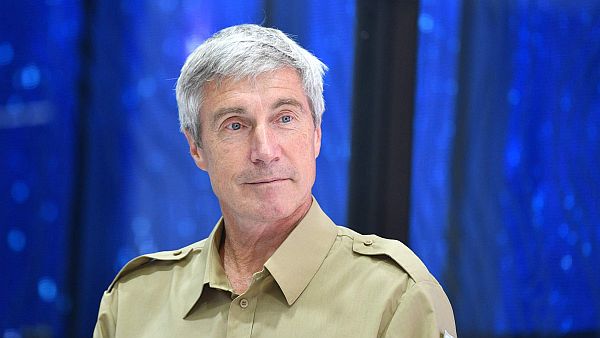
A decision on how the new space station will be built to replace the ISS may be made by 2024. This was stated in an interview with Izvestia by the executive director of Roscosmos for manned programs, Sergei Krikalyov.
According to him, it is currently being discussed whether a completely new station will be created, or if the “replacement” will be attached to the old one, and then detached. Sergei Krikalyov also spoke about why dugouts may be needed on the Moon, outlined the main obstacles for manned flights to other planets, and shared details of cooperation with American astronauts in new conditions.
The fate of the ISS
Izvestia: Sergei Konstantinovich, the confrontation with the West calls into question cooperation with the Americans in space. Do you think it will come to a final breakup?
Sergei: Disagreements on Earth have arisen before, but the experience of cooperation with American astronauts in space was positive, we always managed to find technical solutions together in orbit in order to explore outer space most effectively. Time will tell whether we can keep it now or not.
Izvestia: How can the future fate of the ISS develop?
Sergei: The International Space Station was created with a guaranteed service life of 15 years. This expired in 2013. The station is currently being operated as it is, and its service life has been extended more than once. In 2020, it was extended until 2024. The option of using the station beyond this year is currently being discussed. The state of the station allows you to do this – the ISS has a safety margin.
The warranty period of operation of some mechanism, even if it is as complex as the ISS, is often confused with the maximum service life limit. The Mir station, with a five-year warranty, flew 15 years. The warranty period, for example, of cars is often three years, but in fact they drive on roads for 20-30 years. The warranty for refrigerators is usually one year, but they work many times longer.
What will the new station look like?
Izvestia: What do you think might replace the ISS?
Sergei: A new station. What it will be is still not very clear, but there may be several scenarios. We are currently discussing whether a completely new station will be built, or whether we will add it to the old one and then detach it. Now our American partners offer the possibility of docking, including commercial modules, and using them as a test platform for testing: if everything goes well, it means that the module can either work as part of the station, or undock.
Izvestia: When will the decision be made?
Sergei: Closer to 2024. It is important to hear the arguments of engineers, technicians, scientists, scientific and technical advice. The final decision depends on the priorities we choose. In the 1980s and 1990s, there were arguments like “let’s stop the manned program altogether,” “let’s stop the development of cosmonautics altogether and make sausage for this money.” This is repeated now, and we are at a new stage of such arguments.
“We don’t know the long-term effects of zero gravity”
Izvestia: Until 2015, you held the record for the total duration of a person’s stay in space – 803 days for six launches. How do such loads affect the body?
Sergei: Any space flight negatively affects the physical condition, requires recovery. And in fact, we still don’t know how fully we are recovering, because there are only a few people who would fly continuously for more than a year, and in total for more than two years. Acute periods of readaptation – how a person learns to walk and stand again, how the body is being rebuilt, how the calcium lost during the flight is returning to the bones-have already been more or less studied. After the first long flight of 18 days of cosmonauts [Petr] Klimuk and [Vitali] Sevast’yanov was taken out of the device, they recovered quite hard, and then it seemed that we had reached the limit of human stay in space. But then countermeasures were taken against the negative effects of zero gravity, and eventually we learned to fly for a long time. But we still don’t know the long-term effects of weightlessness on the human body: science continues to search for answers to these questions.
Izvestia: Is this the main limiting factor for manned flights to distant planets, or is radiation more important?
Sergei: The maximum achieved duration of space flights is one year and two months, this record was set by Valerii Polyakov. Then there are not very significant changes, but so far there is no possibility to increase the duration, because another limiting factor is included-radiation. The problem is not only in the increased level of radiation, but also in the time during which a person is exposed to radiation. The dose is the product of the radiation level over time. A person can either fly for a long time in low-Earth orbit, where the radiation level is lower, or the flights should be short. It is difficult to deal with radiation: you need to either improve the means of protection against, or reach your destination faster during space travel. Both require new technical tools, and work is already underway on them.
Dugouts on the Moon
Izvestia: Do lunar programs also depend on these developments?
Sergei: The radiation on the Moon is higher than on Earth, and higher than in the low-Earth orbit we fly in. On short expeditions, this is perfectly acceptable, but on flights to the Moon, if we need to stay there for a long time, radiation will become a problem. Scientists have long been thinking about how to solve this problem. One option is to cover the module with lunar soil regolith [the surface loose layer of lunar soil is a product of space weathering of the rock in place. – Izvestia], so that it becomes a protection, because you don’t get a lot of lead or metal there.
Izvestia: “Lunar dugouts?”
Sergei: Like dugouts, yes. There were such projects in the 1960s, and if you go back to them now, you will need to make a semi-buried module and fill it with regolith from above with some kind of excavator, so that it protects astronauts from radiation if they stay there for a long time.
The Buran Mystery
Izvestia: The Soviet orbital reusable aircraft “Buran” is considered the peak achievement of engineering and domestic technologies. And the abrupt curtailment of the flight program remains one of the mysteries of Russian cosmonautics. When you were preparing for the Buran manned flight, were there any signs that the program was about to close?
Sergei: No. Quite a lot of people were preparing for the Buran flight, including specialists from the flight test institute, test pilots from Aktobe, and engineers from NPO Energia. Four crews were formed, and during the re-formation, I was added to the fourth crew. By this time I was flying as an athlete pilot, as an aerobatic pilot, in 1986 I completed general space training, and from 1986 to 1988 I was sent to prepare for the flight on the Buran . We had a flight practice – familiarization flights. The training for Buran was very interesting, and it’s a pity that we didn’t manage to fly on the device itself.
Izvestia: Why didn’t the manned flight on the Buran take place?
Sergei: First of all, this is due to the fact that the payload was not ready. The people who created the Buran itself and the launch vehicle have completed their task. And those who were supposed to create a payload for it, either did not really believe that a vehicle would be created, or something else. But when a reusable orbital plane was created, it turned out that there was not much to carry on it. Therefore, this program is slowly curtailed.
Izvestia: Did the scientists let you down?
Sergei: Not just scientists. In this case, it so happened that the payload was mainly created for other launch vehicles, and it turned out that there was no urgent need for manned flights under the Buran program, and the program turned out to be quite expensive. At the same time, it potentially made it possible to contribute to ensuring the security of our country.
Ships, satellites, and priorities
Izvestia: The Central Research Institute of Robotics and Technical Cybernetics had created a manipulator for Buran that can collect satellites in a “basket.” This project also turned out to be irrelevant?
Sergei: Yes, such a concept was developed, but there was no practical need for it. The development was based on repair tasks: it happened that due to the failure of some relatively simple board, an expensive satellite failed. The idea was that it would be possible to pick up satellites, change boards and launch them again, but, as it turned out, the cost of such maintenance was commensurate with the creation of a new satellite. In addition, in order to take the satellite, it was necessary to fly up to it, equalize the speed, which is very difficult, although technically possible. And these vehicles fly in orbit many times faster than a bullet. Priorities have changed, and financial opportunities have moved to another area.
Izvestia: What are the differences between our Buran program and the American Shuttle program?
Sergei: The Americans made this system earlier and in a slightly different way. They have based the creation of a space station on a Shuttle-type transport system. Our orbital stations were built from self-propelled modules; we didn’t need Buran-type ships for this purpose.
From the point of view of aerodynamics, the laws of physics are still the same, the speeds are the same, so the vehicles were very similar. The main difference between our and the American reusable spacecraft programs was not so much in the ship itself, but in the launch vehicle. For the Americans, this is a large tank with two solid-fuel boosters, and all the engines were on the shuttle, and for us it was an independent super-heavy launch vehicle Energia, on the side of which the Buran was mounted.
An important difference is that we immediately made an automatic system. The first and only flight of the Buran took place in automatic mode, and this, by the way, may have delayed the launch. The Americans made an automatic landing only in the second half of the program.
Mir – time
Izvestia: You worked both on the Mir station and on the ISS. What are the main differences between stations?
Sergei: There are differences and similarities. The similarity is that both stations are modular and specialized modules. This was the case both on Mir and on the ISS. The system of air purification from carbon dioxide in the Russian segment has changed little since the days of Mir. Some systems have taken a step further: Mir did not have such communication channels as are currently available on the ISS. The power supply is much more powerful on the ISS due to the deployment of large solar panels. The ISS has converters that convert the voltage, and it is different on our segment of the station and on the American one.
Izvestia: Has the Mir station exhausted its resource by the time it was deorbited?
Sergei: We saw certain problems at the end of the Mir station’s life span, realized them, and compensated for them when creating the Russian segment of the International Space Station. But there are always difficulties, as well as ways to overcome them. In addition to technical difficulties, there were also financial ones: during this period, we had already begun to build the International Space Station and bear the costs associated with it. It was almost impossible for the country to carry two stations, so there was a natural replacement of the new one with the old one. If it weren’t for this, we could probably continue to support the Mir station.
Linked from Russian space news