About me
An introduction to me, both physical and psychological.
Physical description

Me, 24 August 2024, aged 53
I was born in 1970. My nationality is Australian, of English, Scottish and Irish ancestry. I was around 160 cm tall, or just under 5 feet 3 inches (62 inches) when younger, but – presumably due to some bone density loss – I was approximately 157.48 cm tall (round up to 158 cm), or 5 feet 2 inches at age 53.
My hair is brown, and was my only beauty asset – the only feature on which I had regularly received compliments throughout my life! It is shoulder-length, of one length, and was quite thick. Some grey hairs are now appearing, though :-(and it has thinned out considerably in 2016 since I lost weight.
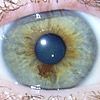
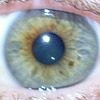
My eyes are “hazel”-green (multicolored) – they have a blue-grey rim, then a green ciliary zone, then brown and gold around the pupillary zone (photos of right and left irises). I think they are also centrally heterochromic going by the description in that Wikipedia article.
| Eyes | #71828c (blue-grey) |
| #9ca581 (greenish) | |
| #a79959 (hazel-brown) | |
| Hair | #8e7166 (medium brown) |
| Skin | #E6C9C1 (light pink-cream) |
I am short-/near-sighted (myopic, along with some astigmatism), and wear glasses. (My sister also wears glasses, with the same condition.) I have been thus since I turned 13 in 1983; curiously my sister also was prescribed glasses around the same age, and neither of my parents were nearsighted (though they did need reading glasses from middle age for presbyopia, as most people do). Presbyopia began to affect me from my early 50s: though I could still read close-up, my eyes found adjusting from far to near in distance glasses increasingly uncomfortable. Although it does not seem to be regarded as such, being myopic really is a disability as I cannot see very well without glasses; objects beyond 30 cm or so are blurry.
| Sph | Cyl | Axis | |
|---|---|---|---|
| Right eye | −4.75 | −0.75 | 115 |
| Left eye | −4.75 | −0.50 | 65 |
| PD | 61 | ||
| Date | Frames | Measurements (lens width – bridge width – arm length) | Notes |
|---|---|---|---|
| November 2014 | Purple metal | 50 □ 16 135 | I was not entirely happy with these either; the frames & bridge were a little too narrow, but I couldn’t change them again. I now know what to look out for next time: bridge of 16-17 mm, lenses at least 30 mm deep, perhaps longer arms (140) if available. |
| November 2014 | Blue metal | 49 □ 18 135 | Lenses too narrow in depth (25 mm) – changed for replacement frames (at extra cost) |
| 2009-2014 | Pink metal | 51 □ 18 ? (probably 135) | Frames a little too wide, but otherwise OK |
| 1999- | Plastic prescription sunglasses | Frames were initially blue, but they were broken when being adjusted by the optometrist, so I had to buy another pair of brown frames for $30 (which I wasn’t happy about!). | |
| 1999-2009 | Blue metal | 48 □ 20 140 | Nice and light, but arms flared out a bit too much; bridge too wide |
| ?-1999 | Gold metal | 49 □ 20 ? (probably 135) | Round frames; look quite ugly now |
| 1990s | Pink metal | Large roundish heavy frames | |
| 1980s | Gold metal | 54 □ 14 | Huge heavy aviator-style frames; far too big (think I chose a men’s frame for some reason) |
| Relevant Journal entries: distance glasses – 16/4/2025; bifocals – 10/3/2026; computer glasses – 30/5/2026. | |||
I also wore contact lenses in the early 1990s, but stopped as I was a bit tired of looking after them. I had no problems with them otherwise.
The optometrist I have seen for all my life so far is at Family Eyecare in Bentleigh.
Michele has also worn glasses for myopia since her teens, but our parents did not need them when young – the only factor I can think of is that we both watched TV in childhood, but our parents did not have it growing up. Both Mum and Dad did need reading glasses from middle age onwards (age-related presbyopia) and Dad later developed cataracts, for which he got lens replacements in 2013 (separate operations in November and December). Mum also developed cataracts in the 2020s.
My weight is variable. As of May 2026, I was approximately 43 kg. My highest has been around 61 kg (5/3/2013 Journal entry), which was bordering on overweight. I hope I can stay at the lower weight!
My looks I would describe as average: not beautiful, not ugly, rather plain. I don’t have a flawless profile, skin or features. I am visibly aging now.
My blood type is O Rh(D) Positive.
My feet measure 10 cm at their widest point, and are 24 cm long.
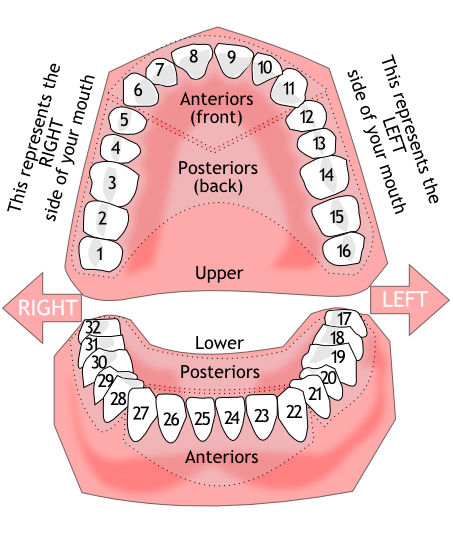
Teeth: The table below records my dental work. My lower molars seem to have become the most troublesome! Recession of gums is also becoming an issue as I get older. (Diagram of teeth numbering.)
| Date | Procedure | Tooth |
|---|---|---|
| 12/1994 (age 24) | Lower wisdom tooth extracted | Lower left (#32) |
| 2/2/1996 (age 25) | Lowr wisdom tooth extracted – the upper wisdom teeth came in straight and were not removed | Lower right (#17) |
| 25/1/2007 (age 36) | Cavity filling (my first), no anesthetic needed; composite material | Second lower right molar (#31) |
| 5/2/2008 (age 37) | Surface adhesive restoration posterior – side patch to cover receded gum (no cavity) – not sure if I should have got this? | First right lower molar (#30) |
| 14/10/2008 (age 37) | Deep cavity filling, anesthetic and drilling needed, composite material. Pain for weeks after filling, but settled eventually. | First lower right molar (#30) |
| 20/2/2009 | Begin wearing nightguard for bruxism. Receded gums and sensitivity mainly on lower molars | |
| 6/3/2009 | Surface adhesive restoration posterior – side patch to cover receded gum (no cavity) | First left lower molar (#19) |
| 21/8/2009 | Possible microscopic crack in #28; done after unrelated surgery on 18/6/2009. Twinges and aches dully now and then. Dentist could find no abnomality. He put sealant in it and in #29 to cover any possible crack. | #28, #29 |
| 20/7/2010 | Surface adhesive restoration posterior – side patch to cover receded gum (no cavity); recession on front lower teeth | Second left lower molar (#18) |
| 1/6/2013 | Cavity filling done, composite filling. Pain for weeks after filling, but settled eventually. | Lower left 2nd molar (#31) |
| 25/6/2013 | Fissure sealing (slight decay in fissure removed). Also pains and aches on that side of jaw due to misalignment (slight overbite). | Lower left 1st molar #19 |
| 30/12/2013 | Two sealants put in lower left molars, though not all crevices covered in first molar; concerned about dark crevices | #18, 19 |
| 10/7/2020 | Wisdom tooth extraction | Upper right third molar #1 |
| 3/10/2020 | Wisdom tooth extraction | Upper left third molar #16 – all gone now, at last! |
| Permanent Dentition | |||||||||||||||
|---|---|---|---|---|---|---|---|---|---|---|---|---|---|---|---|
| upper left | upper right | ||||||||||||||
| 16 | 15 | 14 | 13 | 12 | 11 | 10 | 9 | 8 | 7 | 6 | 5 | 4 | 3 | 2 | 1 |
| 17 | 18 | 19 | 20 | 21 | 22 | 23 | 24 | 25 | 26 | 27 | 28 | 29 | 30 | 31 | 32 |
| lower left | lower right | ||||||||||||||
Family
My parents were born in the 1930s; both are retired. My sadly now-late Dad was born in England then emigrated to Australia in the 1960s. There he worked as a government Airworthiness Inspector. Mum was born in Australia and worked as a nurse. I have one younger sister who is 18 months younger than me; she is married and has four now-adult children. My grandparents are all deceased (the last, my maternal grandmother whom I was closest to and miss very much, died in 2000 aged 102).
Name etymology
My first name, Suzanne, is the French version of Susanna, an originally Hebrew name meaning ”Lily.” My second name, Bronwyn, is “Seemingly derived from Welsh bron ‘breast’ and gwen ‘white, blessed’.” My surname is Irish, originating in County Mayo, and is pronounced Mk-Hale.
MCHALE/HOSTY/MERRICK/MEYLER: These surnames are examples of Welsh or English names which ‘Gaelicised’ in Ireland following the Norman Conquest of Britain. McHale (Mac Haol), Hosty (Mac Oiste), Merrick (a bearer named Oidsi Mac Mhebric is listed in the Annals of Ulster in AD 1272) and Meyler (Mac Maoilir) all contain a Welsh personal name, but have received the Irish prefix mac ‘son of’.
McHale − son of Hywel: McHale is one of the Irish surnames that are actually Welsh. Another one of the Irish surnames that are actually Welsh is McHale. The McHale surname is common in County Mayo and originates from a Welsh family who settled there! Both Irish and Welsh surnames are similar in that they have a tradition of translating to “son of” a particular forefather’s name. The Welsh first name, “Hywel,” is believed to be the personal name the family of settlers belonged to, resulting in their Irish community members naming them “Mac Haol,” as was tradition. Therefore, this Irish surname ‘McHale’ is an anglicisation of the Gaelic for “son of Hywel.”
Hywel is “From Old Welsh Higuel meaning ‘eminent, prominent’ (literally ‘well-seen’). So a literal translation of my names would be something like “Eminent White Lily”!
Marital status
I am single, so I am a “Miss”! I have no interest in marriage and having children. I have had little contact with children in my life, but certainly do not dislike them, though I am not used to being around them. I am probably somewhat asexual and I hate the physical aspect of being female (i.e. having reproductive organs and all the hassle involved with them).
Personality
I am essentially an introvert and am really only comfortable around people I know well, such as family members. (On the Internet it is somewhat different, as people are disembodied entities and thus easier to communicate with). I have had mental health issues for most of my life, mainly depression and melancholy. Depression first started to seriously affect me as a teenager in 1986 and would ultimately lead to me dropping out of Year 12. Bouts of severe depression have alternated with a milder despondency (dysthymia), where I feel dead inside and unable to gain much enjoyment out of anything.
From 1988 to 1993 I had an eating disorder for five years (initially anorexia, then a form of bulimia, “purging” with exercise), initiated by my attempt at dieting in 1988. I also did not menstruate for those five years – this did not upset me, though I effectively entered a sort of menopause and lost bone calcium. From 2016 I repeated the same behavior (have not menstruated since 22/9/2015), and am very underweight, though, unlike when I was young, I do not have the energy to exercise intensively anymore. I am now too old to care, though (it is a passive form of self-destruction, I guess).
I feel hollow, like a void, like I am nothing; that I have no identity and no purpose. My life so far has been pointless and meaningless, and I feel I am just marking time before I die. That the only thing which keeps me motivated each day are my interests and daydreams, and without these – and underneath them – I am an empty shell, a non-person. I wrote these two verses in 2000 that express this inner emptiness:
There are no stars here
When I close my eyes
I am alone in this darkness
In the Universe of my mind.
The void of space
Is the void within me
There is only emptiness
Where my soul should be.
Part of this feeling comes from never having found my purpose in life, such as a fulfilling career. I wish I could escape myself, or be someone else. As a human I feel rather useless and worthless (and that is something I sometimes ask myself: what is my value as a person? I can’t come up with a positive answer). I have an ongoing existential crisis.
I seem to be unable to do things in moderation; any interest becomes obsessive. My attempt at losing weight in 1988 turned into an eating disorder. I suspect I have an addictive personality; if I were exposed to alcohol or drugs I would become an addict. I distinctly recall a classmate saying to me in 1987, in reference to some problems I was having: “You’ve gone from the sublime to the ridiculous.”
Asperger’s Syndrome/autistic? Schizoid as well?
Since childhood, I have had the vague feeling that I was weird or “different.” I first read about – and learned of – Asperger’s Syndrome (a condition related to autism – note that from 2022 the two were subsumed into autism spectrum disorder) in this article, “From Einstein to Gates, the new autism,” in 2001 and realized that I had many of the traits described in the newspaper article (though I disagree with some of its generalizations, such as the “poor imagination”). The condition only received widespread attention in the 1990s, though it has likely been around for much of human evolution.
Profile of a person with Asperger’s Syndrome (from the AS Support Network in Victoria, Australia):
The typical person with Asperger’s Syndrome is a loner who never quite fits in because of eccentric behavior, peculiar ways of speaking and a lack of social skills. He or she may be interested in social relationships but lacks the ability to understand and use the rules governing social behavior […] People with Asperger’s Syndrome may graduate from regular schools and hold down jobs, but they are often disadvantaged by their odd behavior and resistance to change. They have difficulty establishing relationships and other children often refuse to return to their homes to play with them. Older children may over time withdraw from the uncomfortable interactions which characterized their early years and retreat into the safety of their family, or even isolate themselves from their family. They may feel rejected but do not understand how their behavioral responses contributed to their isolation.
I have had (and have) many obsessions and interests. I tend to focus on one interest to the exclusion of everything else, and can only write about or draw that particular interest. Many of the interests tend to be obscure and odd. One thing that has been my main and constant refuge is my imagination. Since childhood I have constantly fantasized and daydreamed, creating imaginary worlds and characters. At times I think this is my only motivation to go on living! If reading, or listening to music, I always have this subconscious visualization going, as though a movie is running through my mind. I sometimes feel that I would be happier living in some form of virtual reality (like the enslaved humans in the first The Matrix movie), where I could be anything I wanted to be. I have spent my life living inside my head rather than the real world – the latter is mostly a tedious distraction. Other times I feel like retreating into a dark cave somewhere and hiding there until I die! I really want to retreat from the world and live in my own cocoon.<
In 2003 there was screened on TV a documentary, “Japan: The Missing Million,” about the hikikomori phenomenon, where Japanese teenagers shut themselves away in their bedrooms for years sometimes, becoming recluses. I underwent a similar experience after having a nervous breakdown in Year 12 at school (1988) and quitting; I stayed in my bedroom for a few months (can’t remember how long exactly), extremely depressed. After some abortive attempts at work and study, I again retreated into a state of semi-reclusion, living with, and dependent upon, my parents until they themselves aged and had to go into residential care in 2025.
I am uncomfortable around other people, yet I still long for social contact and closeness, and I do not like to be lonely (as most people wouldn’t). Perhaps my relative isolation has made me self-aware to an unusual degree, but it is not a particularly happy way to be (I think too much). The Internet is one way of alleviating this; I have received many e-mails I get from people who visit my site, and I feel a little less isolated (though this can feel like communing with disembodied ghosts, and I rarely receive any correspondence now).
I have sometimes wondered if I was a changeling, and the normal version of me lives somewhere else!
Some high-functioning autistic adults have come to identify with changelings (or other replacements, such as aliens) for this reason and their own feeling of being in a world where they don’t belong and of practically not being the same species as the “normal” people around them.
Some autistic behaviors that I have:
- I find prolonged eye contact uncomfortable. A description I read is that eye contact is akin to looking into glaringly bright headlights.
- I usually dislike physical contact with others/being touched, but have learned to tolerate this as I age – I don’t mind hugs, but will wait for another to initiate these!
- I feel inadequate at finding the right words to say when wanting to comfort someone in distress.
- I get very attached to places and objects, and find change upsetting (eg. housing developments in my neighborhood mean the loss of familiar places). I want my surroundings and the people I know to remain the same forever, though this is of course unrealistic.
- I like predictability and stability; I prefer order to chaos. I work best when I understand exactly what to do. I am not good at showing initiative or leadership, or interacting with others.
- I used to rock back-and-forth when seated, and side-to-side when lying in bed. I found the repetitive movement aided my thoughts and daydreaming – rather like a sort of meditation. Another apparent trait is walking on my toes.
- Sensory issues/misophonia: I am hypersensitive to certain noises and sensations. Some examples of these are the sound of someone eating, the feel of scratchy labels on clothing against my skin, and fluorescent lighting (too bright and harsh).
Below is a letter from a psychologist whom I was seeing in 1988. He diagnosed me as schizoid.
I first saw her on 5/9/88, then she continued to see me at regular intervals till 1/12/89.
Suzanne was referred for the following reasons:
- unable to go to school
- unable to relate to parents
- very limited contact with peer group
- a severe obsessive, compulsive condition regarding food, weight and exercise.
On her first visit she appeared to be lost, totally lacking in confidence, shy, withdrawn and while outwardly calm, she was inwardly seething with repressed anger. At a later visit, the mother raised a query of schizophrenia and stated “her troubles started when she was born – the nurses made me hold back with her until the doctor came. This was a long period of time. As an infant Suzanne was never affectionate, a long history of head banging and compulsive rocking and crying day and night. I grew to dislike her.”
Intelligence testing with the W.I.S.C. showed her to be well above average in ability. The outstanding features of her projective emotional tests showed the following traits:
Extremely reserved; schizoid personality; very low ego strength; almost no emotional control; very low super ego; expedient attitude, evades rules and obligations; a high degree of suspicion concerning all people; severely tense, apprehensive and depressively troubled.
As I stated earlier, I saw her for a period of nearly twelve months. Her response to psychotherapy was not good but we were able to improve her communication, particularly with her father. With her father’s assistance, she applied for and gained an apprenticeship as a trainee aircraft mechanic. Suzanne was given every opportunity to succeed in this course but could not cope living as a boarder away from home, nor could she relate to or cope with the other apprentices or the staff. Her father had to bring her back home.
Other than for a part-time job with […] (apparently she has a good record here) she stays at home, preoccupied with food and exercise, still not able to cope with people to the extent that she is unable to eat with her parents – insists on cooking her own meals and eating in the privacy of her own room.
I read this letter in 2008 (Mum dug it up out of a storage box) and some of it is quite surprising! I did seem to have autistic/Asperger’s tendencies from a very young age, judging from that statement by Mum, and a great difficulty in bonding with, and relating to, other people.
I have not coped well with life and social demands and am still a recluse, so in that sense I have not changed.
Schizoid personality?
Another definition that fits me well, as noted in the letter extract above, is that of a schizoid personality. The criteria for this, according to the ICD-10, includes at least 4 of the following:
- Emotional coldness, detachment or reduced affection
- Limited capacity to express either positive or negative emotions towards others
- Consistent preference for solitary activities
- Very few (if any) close friends or relationships, and a lack of desire for such
- Indifference to either praise or criticism
- Taking pleasure in few, if any, activities
- Indifference to social norms and conventions
- Preoccupation with fantasy and introspection
- Lack of desire for sexual experiences with another person
Many of these overlap with Asperger’s/autistic traits, so I seem to have aspects of both.
Thoughts of suicide entered my mind around 1986-1987, from about 15 years or so; I can’t recall the exact details (i.e. how the idea occurred to me and where I first learned of the concept). That was when depression began to seriously plague me. So far, though, I have never attempted suicide. I simply lack the courage to – most methods are painful, require a lot of effort and are not always effective. If one should survive a suicide attempt, you could end up permanently maimed (physically or mentally) and be even worse off than before (see “How Not to Commit Suicide” by Art Kleiner). I did write out a list of “Reasons for” and “Reasons against,” and the first was much longer! But as I have a passive personality I can’t motivate myself to take that drastic step. At heart, like most people, I really want to live and find some joy and purpose out of life.
Suicide is always in the back of my mind as a “get-out clause” should life become unbearable, though whatever happens in my life I will eventually end up dead anyway – that inevitability provides an odd sort of comfort. I will not have to endure myself forever.
Updated: 30/5/2026