The Sparrow – notes
Some notes for Mary Doria Russell’s alien contact duology, The Sparrow and Children of God. These notes focus on the worldbuilding aspect.
Languages
Runa language
Note: based on real language Quechua.
- Anukar
- a type of flower
- Azhawasi
- the space enclosed
- Bra noa
- homeless
- Chaypas-ru zhari i washan
- Challalla khaeri
- greeting
- Datinsa
- type of flower
- Djanada
- dangerous
- Enroa
- Fierno
- noise, fuss
- Hampiy
- stemmed plant used for shelters
- k’jip
- type of harvested plant
- Lejano
- Lejano’nta banalja
- Moranor
- creature that calls at redlight (third sun set)
- Pik
- type of root
- Piyanot
- grazing herbivores
- Porai
- mental/“heart” sickness, depression
- Rakari
- a harvested plant
- Runa
- People
- Ruanja
- Runa language
- Sipaj
- Sipaj, Askama! Asukar hawas Djordj. Kinsa, tupa sinchiz k’jna, je?
- Si zhao
- flower
- Sa zhay
- flowers
- Tinguen
- Tinguen’ta sinoa da
Jana’ata language
Note: based on real language Nepali.
- Ala
- similarity, parallel (suffix)
- ba’aran
- type of duel
- ba’ardali basnu cbarpi
- singing contest or duel
- bahli
- monetary currency
- berinje
- a trading product (unspecified)
- cha’ar
- distance measurement unit
- Eighth Na’alpa
- date
- Ha
- (active verb)
- Hasta’akala
- To be made like ivy (ritual hand mutilation)
- Kbukurik
- taking meat without permission
- Kintai
- ?type of edible seed
- Kivnest
- river-dwelling creature
- k’jip
- plant grown in fields
- K’San
- Jana’ata language
- n’jorni
- outsiders
- Partan
- month or season
- Va
- landname (prefix)
- VaGayjur
- of Gayjur (city); Supaari’s assumed surname (“landname”)
- VaHaptaa
- from nowhere; landless
- VaRakhati
- ?Of Rakhat (plural)
- Reshtar
- spare, extra; also leadership position
- Sinonja
- type of plant that is harvested
- Sta’aka
- type of ivy
- Yasapa
- type of tea
Q: How did you create your alien languages?
A: I took linguistics as part of my anthropological training, and I’ve also studied a number of foreign languages (in order: Church Latin, Spanish, Russian, French, Croatian, Prayerbook Hebrew, Italian and German, with widely varying degrees of seriousness and competence). I didn’t want either Slavic or Romance influence to creep into the alien languages, so I bought traveler’s phrase books for Nepali, which served as the basis for K’San, and Quechua, which was the basis for Ruanja. I would flip thought the books looking for words that were distinctive visually and aurally, and had a nice sound.
For example, the name ASKAMA is Quechua for question. I thought that was right for an inquisitive little girl. The name JHOLAA sounds lovely, but means backpack in Nepali. Often, though, I changed a few letters, and the “alien” words don’t mean anything in either Nepali or Quechua.
http://marydoriarussell.net/novels/the-sparrow/faq/
Rakhat descriptions
They did a full survey to begin with, launching several satellites to encircle the planet, collecting atmospheric and geographic data. At this distance, the patterns of ocean and land-mass were clear. The overall impression was of greens and blues running to purple, broken by areas of red and brown and yellow, frosted with the white of clouds and very small ice caps. It wasn’t Earth but it was beautiful, and it had a powerful pull on their emotions.
THE NEXT MORNING was as tense and demanding as anything Anne had ever sat through. Or floated through, in this case. She meant to follow it all but found herself distracted and savagely restless during a long debate about whether the lander fuel would combust properly in the atmosphere of the planet. The air was breathable, and the weather was stinking hot but wouldn’t kill them. There were a lot of thunderstorms and cyclones going on at any given time, which could have been due to the season or to the amount of energy pouring into the system from the three suns.
Marc’s presentation was thorough but frustrating. He could delineate boundaries between ecological regions but who knew what that predominantly lavender stuff was? It might be something like a deciduous forest in summer or something like grasslands or something like conifer forest or even an enormous algae mat. “Whatever it is,” Marc pointed out with a shrug, “there is a great deal of it.” Terrain was easier for him to interpret with confidence. Open bodies of water were sometimes plain, but Marc warned that they could be confused with swampy areas. Tidal zones were remarkably extensive – not surprising with multiple moons. There were obvious oxbow lakes and many river systems. He believed there were areas of cultivated land but told them, “It is quite easy to confuse agricultural plantations with mixed species forest.”
“George says the planet is a little smaller than Earth, so we expect the gravity to be a little lighter than we were used to. That’s a plus. But we’ve all lost muscle mass and bone density, and our feet are too soft to walk very far. And frankly, everyone is strung out,” she said. “Alan, I know you’re just dying to see the instruments and to sing with the Singers, but making contact is going to be very risky. Do you honestly feel you’re ready to cope with any kind of crisis at this point?“
– The Sparrow, Chapter 18
THERE FOLLOWED DAYS of rapture and hilarity. Children on a field trip to Eden, they named everything they saw. The eat-me’s and the elephant birds, hoppers and walkies, the all-black Jesuits and the all-brown Franciscans, scummies and crawlers, hose-noses and squirrel-tails. Little green guys, blue-backs and flower-faces, and Richard Nixons, which walked bent over looking for food. And then black-and-white Dominicans, to round out their collection of orders. And turtle trees, whose seed pods resembled turtle shells; peanut bushes, whose brown blossoms were double-lobed; baby’s feet, with foliage soft as rose petals; and pig plants, whose leaves were like sows’ ears.
The niches were all there. Air to fly through, water to swim in, soil to burrow under, vegetation to exploit and hide behind. The principles were the same: form follows function, reach high for sunlight, strut your stuff to attract a mate, scatter lots of offspring or take good care of a precious few, warn predators that you’re poisonous with bright colors or blend into the background to escape detection. But the sheer beauty and ingenuity of the animal adaptations were breathtaking and the gorgeousness of the plant life staggering.
D.W. had come in over ocean and flown low as a drug smuggler over what might as well be called treetops. He spotted a clearing and made a snap decision to land there rather than further on, in the plain Marc had chosen. Surrounded by the tall, heavy-stemmed vegetation that filled the niche of trees, they felt safe and unobserved. If the weather promised to be mild, they slept in the open, weaponless, too ignorant or trusting to worry about major carnivores or aggressive poisonous things. They had tents and took shelter during the sudden rainstorms, but they were frequently drenched. No one cared. The nights were so brief and the days so warm, they dried out quickly and napped in the leaf-filtered sunlight, drowsing in the warmth, contented and lazy as dogs by firelight.
Even dozing, they were suffused with their surroundings. The wind-borne fragrance of a thousand plants as varied as stephanotis, pine, skunk cabbage, lemon, jasmine, grass, but unlike any of them; the heavy dank odor of vegetation decayed by another world’s bacteria; the oak-like musky bass notes of the crushed herbs they lay on overwhelmed their ability to perceive and categorize such things. As three dawns and three dusks came and went, the sounds of the long day changed, from chorus to chorus of trilling, shrieking, whirring things. Sometimes they could match the sound to the animal that made it: a shrilling that belonged to the lizardlike creatures they called little green guys, an amazingly loud rasping noise that was made by a small scaly biped staking out its territory in the forest’s ground litter. Most often, the sounds were full of mystery, as was the God that some of them worshiped.
– The Sparrow, Chapter 19
Locations
- Galatna
- city on Rakhat’s largest continent
- Fatzna Island
- where glassmakers are located
- Radina Bay
- location of Galatna
- Gayjur
- city
- Kashan
- province of Rakhat
- Lanjeri
- a village in Kashan
- Masna’a Tafa’i
- a coastline
Myths
Ingwy Cycle
The storytellers claimed that the first five Jana’ata hunters and the first five Runa herds were created by Ingwy on an island, where balance could be easily lost and annihilation was the price of poor stewardship.
Five times the hunters and their mates erred: leaving things to chance, killing without thought, letting their own numbers grow uncontrolled, and all was lost. On the sixth attempt, Tikat Father of Us All learned to breed the Runa and Sa’arhi Our Mother was made his consort and they were brought to the mainland and given dominion. There were other stories about Pa’au and Tiha’ai and the first brothers, and on and on.
– The Sparrow, Chapter 29
Species
WHICH LED TO AN interesting thought experiment: what if predator and prey remained separate?
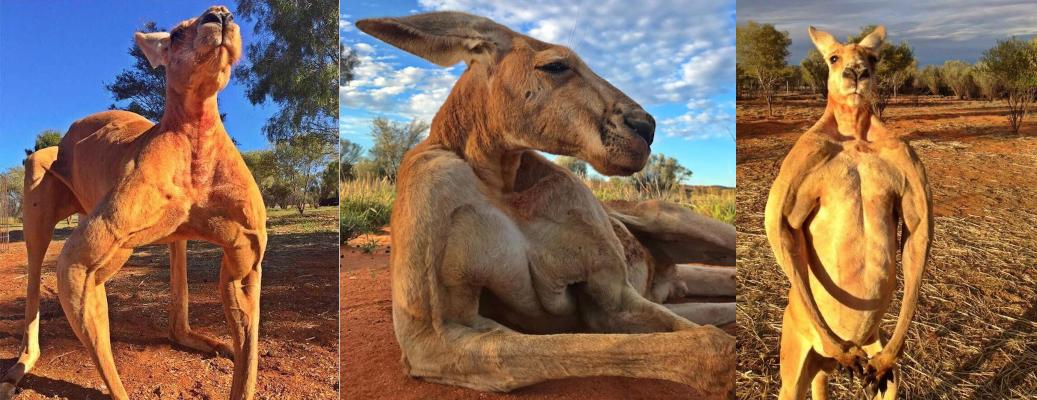
To develop the geology, ecology, and biology of Rakhat, I imagined the paleontology of Earth without the presence of an opportunistic, omnivorous primate species that had gotten cocky after killing off a lot of bears and wolves and lions. Having spent some time on crutches, I’d learned how limiting it is to employ all four limbs in locomotion, so the first criterion for my aliens was that they should have their hands free. Not a problem. Bipedalism has developed in several lineages on Earth: hominids; dinosaurs and birds; wallabies and kangaroos. I had worked in Australia in the 1980s and liked the idea of kangaroos as the physical model for the VaRakhati. Take it from me: if you come face-to-face with an adult male red kangaroo in the Outback, you will feel a very definite respect. They’re startlingly big with a broad muscular chest and three-inch claws. They look you right in the eye, which is intimidating even when you know they’re dumber than a five-pound bag of sand.
So, where in Earth ecology do we find the development of intelligence? Among primates, yes, and octopi, but also in many forms of social carnivore: killer whales, wolves, cheetahs, lions – and quite possibly among raptors in the deep past. Raptors were bipedal as well, which led me to Dougal Dixon’s The New Dinosaurs. I took his concept of predator mimicry a few steps further. What if a predator species domesticated its prey? We’ve done that repeatedly with sheep, goats, cattle, horses, etc. And what if the predators bred for specific tasks as well as for docility? Not much of a stretch there. We’ve developed many different breeds of dogs and horses for our own purposes, even while both of those species have remained a source of meat.
My son was very young when I was writing the story and he always wanted to know, “Are the aliens smarter than us or less smart?” I always answered, “They are different.” We manufacture our tools. They breed theirs.
– The Sparrow, 20th anniversary edition
Chip asked Mary Doria Russell: What did the people of Rakhat look like? I loved The Sparrow, and liked Children of God. But after finishing the books, I am still not sure whether the Rakhat species resembled bunny rabbits, kangaroos, or something in between. What say you, people of Earth?
Mary Doria Russell: Kangaroos, mainly, which look like bipedal wolves and deer when you think about their faces.
Runa description
The child looked at him with the strange and beautiful double-irised eyes of the VaRakhati.
– The Sparrow, Chapter 14
As D.W. took in the command structure of the group, so Anne Edwards studied the anatomy. The two species were not grotesque to one another. They shared a general body plan: bipedal, with forelimbs specialized for grasping and manipulation. Their faces also held a similarity in general, and the differences were not shocking or hideous to Anne; she found them beautiful, as she found many other species beautiful, here and at home. Large mobile ears, erect and carried high on the sides of the head. Gorgeous eyes, large and densely lashed, calm as camels’. The nose was convex, broad at the tip, curving smoothly off to meet the muzzle, which projected rather more noticeably than was ever the case among humans. The mouth, lipless and broad. There were many differences, of course.
On the gross level, the most striking was that the humans were tailless, an anomaly on their home planet as well; the vast majority of vertebrates on Earth had tails, and Anne had never understood why apes and guinea pigs had lost them. And another human oddity stood out, here as at home: relative hairlessness. The villagers were covered with smooth dense coats of hair, lying flat to muscular bodies. They were as sleek as Siamese cats: buff-colored with lovely dark brown markings around the eyes, like Cleopatra’s kohl, and a darker shading that ran down the spine. “They are so beautiful,” Anne breathed and she wondered, distressed, if such uniformly handsome people would find humans repulsive – flat-faced and ugly, with ridiculous patches of white and red and brown and black hair, tall and medium and short, bearded and barefaced and sexually dimorphic to boot. We are outlandish, she thought, in the truest sense of the word …
From out of the center of the crowd an individual of middle height and indeterminate sex came forward. Anne watched, scarcely breathing, as this person separated from the group to approach them. She realized then that Marc had been making a similar biological assessment, for as this person stepped nearer, he cried very softly, “The eyes, Anne!” Each orbit contained a doubled iris, arranged horizontally in a figure-eight around two pupils of variable size, like the bizarre eye of the cuttlefish. This much they had seen before. It was the color that transfixed her: a dark blue, almost violet, as luminous as the stained glass at Chartres.
– The Sparrow, Chapter 21
Jana’ata description
John suppressed a sigh and turned toward the door. His eyes swept past a sketch, lying on top of the small plain bureau. On something like paper, drawn in something like ink. A group of VaRakhati. Faces of great dignity and considerable charm. Extraordinary eyes, frilled with lashes to guard against the brilliant sunlight. Funny how you could tell that these were unusually handsome individuals, even when unfamiliar with their standards of beauty.
– The Sparrow, Chapter 1
An unusual villager, willing to travel alone and to deal directly with Supaari VaGayjur in his own compound, Chaypas VaKashan returned the greeting without fear. Apart from their attire, they were alike enough to be sisters or near cousins, seen with a casual eye, from a distance. Supaari was more heavily muscled, slightly larger overall, facts enhanced by the padded gown, quilted and stiffened with embroidery; the pattens, which gave him a hand’s width of extra height; the headpiece, which provided another measure of stature and identified him as a merchant and, by implication, a third-born child. His clothing today emphasized the differences in their lives, but, when he wished, Supaari could pass for Runa, wearing the trailing oversleeves and boots of an urban Runao. It was not illegal. It simply wasn’t done. Most Jana’ata, even most thirds, would rather have died than be taken for Runa. Most Jana’ata, even most thirds, were not nearly so wealthy as Supaari VaGayjur. It was his stigma and his comfort, that wealth.
– The Sparrow, Chapter 23
“Prior to the appearance of Supaari VaGayjur, did you have any idea that there existed a second sentient species on Rakhat?” Johannes Voelker asked. It seemed like an abrupt change in topic and the Spaniard turned to him, clearly expecting and prepared to meet an attack. “No.” But then he admitted, “There were indications that we failed to recognize. The Runa have ten fingers, but the numbering system was based on six, for example. Which made sense to us once we found out that the Jana’ata hand has only three digits.
However, male Jana’ata do resemble female Runa in overall appearance and in size.”
“How odd! Only the males?” Felipe asked.
“Female Jana’ata are sequestered and guarded. I cannot say how closely they resemble the Runa, male or female. The Runa sexes,” Sandoz reminded them, “are quite alike, but the males are on average a good deal smaller. For a long time, we were confused about their gender because of that and because their sex roles did not match our expectations. Robichaux’s Madonna and Child, by the way, should perhaps be renamed Saint Joseph and Child. Manuzhai was a male.” There was a small burst of laughter and comment as the others admitted how surprised they’d been when they’d read this in the mission reports. “Manuzhai raised Askama and was smaller than his wife,” Sandoz continued, “so we believed him female. Chaypas traveled extensively and carried on all the trade, which led us to assume that she was a male. The Runa were equally confused by us.”
“If the Runa don’t wear much besides ribbons,” John said, clearing his throat, “couldn’t you, um, see –?”
“Runa sexual organs are inconspicuous unless mating is imminent,” Sandoz said and continued blandly, “Along with the dentition and claws, this is one unmistakable difference between male Jana’ata and Runa of either sex. It was not immediately apparent because Jana’ata are generally clothed.”
Voelker broke the silence that fell at that, returning to his earlier theme. “Surely it is unusual for two species to resemble each other so closely. Are they related biologically as well as culturally?”
“Dr. Edwards was able to obtain blood samples for genetic analysis. The two species were almost certainly not related, except distantly, as mammals like lions and zebra are related. She and Father Robichaux thought the similarities might be due to convergence: a natural selection in the evolution of sentience that led the two species to similar morphological and behavioral traits. I think not.” He stopped and looked to Giuliani, a scholar whom he expected to understand why he was uncomfortable. “You understand that I speculate, yes? And this is not my field, but –”
“Of course.”
Sandoz stood and walked to the windows. “The Jana’ata are carnivores, with a dentition and forelimb adapted for killing. Their intelligence and capacity for complex social organization probably evolved in the context of cooperative hunting. The Runa are vegetarians with a broad range of diet. Their fine motor control likely derived from manipulative skill associated with the exploitation of small seeds, picking blossoms and so forth. Their three-dimensional memories are excellent; they carry very precise mental maps of their environment and the changing array of seasonal resources. This may account for the evolution of their intelligence, but only in part.” Sandoz stopped and stared out the window for a few moments. Beginning to tire, Edward Behr thought, but doing well. “The paleontology of our own planet has many examples of predators and prey locked in competition, ratcheting upward in intelligence and sophisticated adaptation. A biological arms race, one might say. On Rakhat, in my opinion, this competition resulted in the evolution of two sentient species.”
“Are you saying that the Runa were the prey?” John asked, horrified.
Sandoz turned, face composed. “Of course. I believe that Jana’ata morphology is a form of mimicry, selected for during predation on Runa herds. Even now, Runa prefer to travel in large groups, with the smaller males and young in the center of the troop and the larger adult females on the outside. A hundred, two hundred thousand years ago, the resemblance between the two species was not nearly so striking, perhaps. But Jana’ata who could best blend in with the female Runa at the edges of the herd were the most successful hunters. The Jana’ata foot is prehensile.” Sandoz paused, and again Giuliani saw the effort it took to go on. “I imagine the hunters simply fell in step with a female toward the back of the troop, reached out to snare her ankle, and brought her down. The more closely the hunter resembled the prey in appearance and behavior and scent, the more successfully he could stalk and kill her.”
“But they cooperate now,” Felipe said. “The Jana’ata rule, but they trade with the Runa, they work together –” He didn’t know whether to be dismayed by the prehistory or uplifted by the present state of coexistence.
“Oh, yes,” Sandoz agreed. “The relationship would certainly have evolved since those days, as would the species themselves. And all that is speculation, although it is consistent with the facts I observed.”
– The Sparrow, Chapter 28
It was full daylight and Marc, peeking through the spaces between the curtains as they were carried uptown, caught glimpses of new areas of the city and got an entirely different impression of the place. Here, Jana’ata were everywhere and conspicuous, “In robes,” Supaari murmured, a little sarcastically, “as heavy as their responsibilities, headdresses as lofty as their ideals.” The faces were very like the Runa faces Marc was familiar with, but there was a hollow-cheeked and wolfish look to them that left him uneasy. Unlike Supaari, they seemed not lively but frighteningly intent, not friendly but coldly courteous, not humorous but keenly observant, and above all: unapproachable. Everywhere, Runa stepped back, bowed or nodded or turned aside. Marc shrank back into his enclosure, now feeling in his gut some of the reasons behind Supaari’s repeated warnings about other Jana’ata, and gave thanks to God that they’d encountered the Runa first.
– The Sparrow, Chapter 30
“1.There are not one but two intelligent species on Rakhat. “The Stella Maris party was initially welcomed as a ‘foreign’ trade delegation by the village of Kashan. The villagers identified themselves as Runa, which simply means ‘People.’ The Runa are large, vegetarian bipeds with stabilizing tails – rather like kangaroos; they have high mobile ears and remarkably beautiful double-irised eyes. Placid in disposition, they are intensely sociable and communitarian.
“Their hands are double-thumbed and their craftsmanship is superb, but some members of the Jesuit party suspected that the Runa in general were somewhat limited intellectually. Their material culture seemed too simple to account for the powerful transmissions first detected on Earth by radio telescope in 2019. Furthermore, the Runa were disturbed and frightened by music, which seemed anomalous, given that it was radio broadcasts of chorales that first alerted us to the existence of Rakhat. However, individual Runa seemed quite bright, and the tentative conclusion was that the village of Kashan was something of a backwater on the edge of a sophisticated civilization. Since there was so much to be learned in Kashan, the decision was made to remain there for a time.
“To the great surprise of our people, the Singers of Rakhat were in fact a second sentient species. The Jana’ata bear a striking but superficial physical resemblance to the Runa. They are carnivorous, with prehensile feet and three-fingered hands that are clawed and rather bearlike. For the first two years of the mission, the Jana’ata were represented by a single individual: Supaari VaGayjur, a merchant based in the city of Gayjur who acted as a middleman for a number of isolated Runa villages in southern Inbrokar, a state that occupies the central third of the largest continent of Rakhat.
– Children of God, Chapter 1
Miscellaneous
NG: As a palaeoanthropologist, you have a thorough acquaintance with the human past. Can you say something about any historical (and biological) models you may have used in constructing the Rakhati cultures?
MDR: Well, there have been times in hominid history when more than one species of intelligent, upright, tool-using ape was around and there were times when they were probably in contact with one another. But for the two intelligent species on Rakhat, my ecological model was the relationship between cheetahs and Thompson’s gazelles. It’s a very elegant but very fragile ecological arrangement. We consider cheetahs to be the dominant species, because we tend to respect predators more than herd animals, but in reality, they are utterly dependent on the gazelles. If anything changed in the gazelle species, the cheetah could very well become extinct in a few weeks’ time.
For the events in Children of God, I drew on the culture of Romanov Russia. Recently the Cleveland Museum of Art had an exhibit of Faberge Eggs. They were breathtakingly beautiful, but I could not look at them without trying to calculate the number of lives each one represented. How many serfs laboured all their lives to concentrate so much wealth in the hands of a single family that the husband could afford to give these eggs to his wife for Easter? It was staggering, and reminded me once again that there was a reason for the Russian Revolution of 1917. So yes, Romanov Russia deserved to be overthrown, and yet that culture produced artwork, dance, literature and music that has never been surpassed in world history, let alone by the Soviet culture that succeeded it.
In Children of God, the Jana’ata were absolute and pitiless despots, but the destruction of their high culture is a tragedy, and there’s no way of knowing if the Runa will ever match what the Jana’ata accomplished. Maybe, maybe not. But whether they do or not, the Runa were entitled to liberate themselves from an oppressive system. And of course, should they themselves become despots in turn, the sin is on their own heads, not on those of the Jana’ata.
NG: Still with history, you’ve already commented in this interview on your treatment of the theme of exploration and its sequel, colonialism. Would it be fair to say that while you’re presenting the inevitable evils of the colonial process, you’re also trying to argue how those evils can be palliated thereafter, even turned to the good (as in the liberation of the Runa)?
MDR: I would not say that evil is palliated by good. Evil is evil. Good sometimes follows evil chronologically, good may even come about in reaction to evil, but that doesn’t excuse or lessen the evil. Just as an example: in the past few decades, West Germany has had one of the most enlightened and liberal refugee policies in Europe. That policy was instituted in direct reaction to Germany’s own horrific history as a maker of refugees. The current policy of decency is a result of historic savagery, and it reflects well on the German people who instituted and supported the welcoming of the dispossessed. It does not in any way palliate the evil of the Third Reich, but it is an honorable and admirable reality in its own right.
The Runa Revolution is simultaneously a catastrophe for the Jana’ata, and the best damned thing that ever happened to the Runa. At the end of Children of God, the Runa are creating a vibrant culture while the Jana’ata are clinging to a precarious existence in unrelieved poverty. It’s too soon to tell how these groups will develop. I don’t believe that power necessarily corrupts, any more than I believe that poverty ennobles. If the Runa create something good, it won’t palliate the despotism of the system that drove them to revolt. If the Jana’ata create something good, it won’t palliate their own near-extinction at the hands of the Runa. I guess I don’t believe in that kind of redemption.
– “Of Prayers and Predators,” Infinity Plus
Cover images at The Internet Speculative Fiction Database for The Sparrow and Children of God.
Linked from Books read